


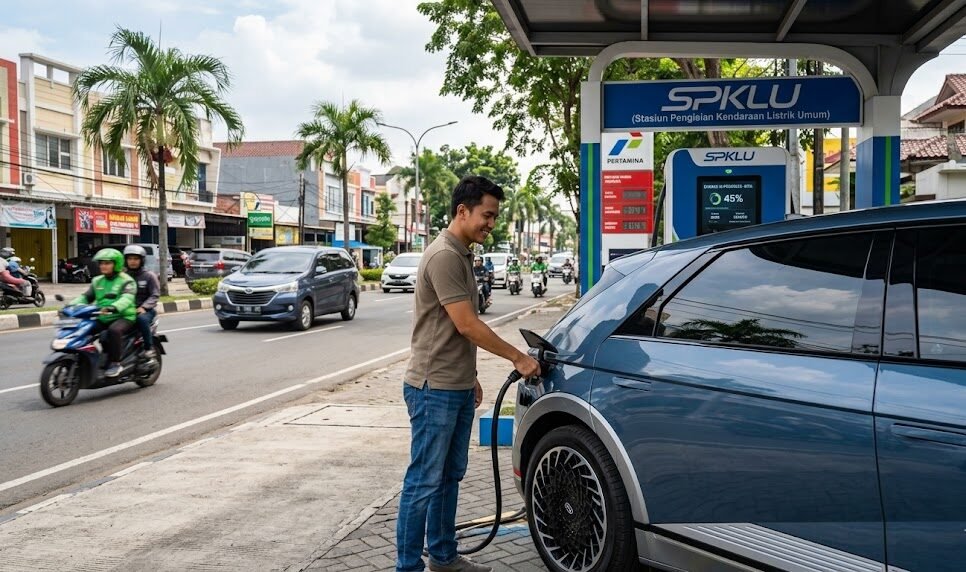
For decades, owning a car in Indonesia followed a familiar financial formula.
You bought the vehicle, filled the tank with fuel, paid for regular servicing, changed the oil every few thousand kilometers, and occasionally braced yourself for unexpected repair bills. It wasn’t always cheap, but at least the costs were predictable.
Then electric vehicles arrived.
At first, EVs were viewed as futuristic machines reserved for technology enthusiasts and environmentally conscious early adopters. But by 2026, electric vehicles have become a serious consideration for mainstream Indonesian drivers. New models are entering the market every year, charging infrastructure is expanding, and public interest continues to grow.
Yet one question still dominates conversations among potential buyers:
Are electric vehicles actually cheaper to own than petrol cars?
The answer is both simple and surprisingly complicated.
In many situations, EV ownership can indeed cost less than driving a traditional gasoline-powered vehicle. However, the true financial picture depends on several factors, including purchase price, driving habits, charging methods, maintenance requirements, and long-term ownership plans.
Let’s break down the numbers and discover whether EV ownership in Indonesia really delivers meaningful savings.
The Initial Purchase Price Challenge
The biggest obstacle facing most EV buyers remains the purchase price.
Although electric vehicle prices have become increasingly competitive, many EVs still cost more upfront than similarly sized petrol-powered cars.
This creates an interesting dilemma.
A buyer may spend tens or even hundreds of millions of rupiah more when purchasing an EV, but potentially save money throughout the ownership period.
The key question becomes whether long-term savings eventually offset the higher initial investment.
Fortunately, the answer is becoming more favorable as EV prices continue declining and competition intensifies.
Several Chinese manufacturers have significantly accelerated this trend by introducing affordable electric models into the Indonesian market.
Electricity Is Usually Cheaper Than Fuel
This is where EVs begin to shine.
One of the most obvious financial advantages comes from daily energy costs.
Charging an EV generally costs substantially less than purchasing petrol for a comparable journey.
Imagine two drivers traveling similar distances every month.
The petrol car owner must regularly visit fuel stations and absorb fluctuations in fuel prices. Meanwhile, the EV owner charges at home or public charging stations, often at significantly lower cost per kilometer.
Over the course of a year, those savings can become substantial.
For high-mileage drivers, the difference can be even more dramatic.
Home Charging Changes Everything
One reason EV ownership can feel surprisingly affordable is the convenience of home charging.
Instead of making dedicated trips to fuel stations, many owners simply plug in their vehicles overnight.
This practice often takes advantage of lower electricity costs while maximizing convenience.
The result is a vehicle that begins each morning fully charged and ready to go.
Beyond financial savings, there is also a time-saving benefit.
Many EV owners quickly realize that charging at home feels less like refueling and more like charging a smartphone.
That subtle convenience contributes significantly to overall ownership satisfaction.
Maintenance Costs Are Lower
Traditional petrol vehicles contain hundreds of moving parts.
Engines require oil changes, filters need replacement, spark plugs wear out, and numerous mechanical systems demand periodic attention.
Electric vehicles eliminate many of these requirements.
There is no engine oil to replace.
No spark plugs.
No exhaust system.
No timing belts.
No complex transmission components in many cases.
This mechanical simplicity often translates into lower maintenance expenses over time.
For many owners, reduced servicing requirements become one of the most appreciated aspects of EV ownership.
Fewer Mechanical Problems
Maintenance savings extend beyond routine servicing.
Electric powertrains generally contain fewer components that can fail.
While EVs certainly require maintenance, their simpler mechanical architecture reduces exposure to many traditional automotive problems.
Fewer moving parts often mean fewer opportunities for expensive repairs.
This does not make EVs immune to issues, but it does change the ownership equation considerably.
For drivers planning long-term ownership, this advantage becomes increasingly valuable.
Battery Concerns Still Matter
No discussion about EV costs would be complete without addressing batteries.
Battery packs represent one of the most expensive components in an electric vehicle.
Potential replacement costs often concern prospective buyers.
Fortunately, battery technology has improved significantly.
Modern batteries are designed to last many years, often supported by lengthy manufacturer warranties.
Most owners will likely sell or replace their vehicles before requiring a full battery replacement.
However, battery health remains an important consideration when evaluating long-term ownership costs.
It is one area where petrol vehicles still maintain certain advantages in consumer perception.
Government Incentives Help
Government policies continue influencing the economics of EV ownership.
Various incentives, tax reductions, and support programs have helped make electric vehicles more attractive to Indonesian consumers.
These measures reduce purchase costs and encourage broader adoption.
While specific policies may evolve over time, government support remains an important factor in improving EV affordability.
For many buyers, these incentives help narrow the price gap between electric and petrol-powered vehicles.
The result is a more competitive marketplace.
Insurance Costs Vary
Insurance is another factor worth considering.
In some cases, EV insurance premiums may be slightly higher due to vehicle value and specialized components.
However, pricing varies significantly depending on the model, insurer, and coverage level.
As electric vehicles become more common, insurance providers are gaining experience and improving pricing structures.
The gap between EV and conventional vehicle insurance costs continues to narrow.
For most owners, insurance alone is unlikely to determine whether an EV makes financial sense.
Public Charging Costs Can Add Up
Home charging delivers the greatest financial benefits.
Public charging tells a slightly different story.
Fast-charging stations offer exceptional convenience but may cost more than residential electricity rates.
Drivers who rely heavily on public charging networks may experience smaller savings compared to those charging primarily at home.
This does not eliminate EV cost advantages.
It simply changes the calculation.
Understanding charging habits is essential when estimating total ownership expenses.
Resale Value Is Improving
Historically, uncertainty surrounding EV resale values created concern among buyers.
That concern is gradually fading.
As electric vehicles become more mainstream, used EV markets are developing more rapidly.
Consumer confidence is increasing, and demand for second-hand electric vehicles continues growing.
Although resale values remain difficult to predict with complete certainty, the outlook is far more positive than it was several years ago.
A healthier used-car market improves overall ownership economics.
Urban Drivers Benefit the Most
Not all drivers experience identical savings.
Urban commuters often gain the greatest financial advantage from EV ownership.
Frequent stop-and-go traffic allows regenerative braking systems to improve efficiency, while shorter daily journeys make charging more convenient.
City driving also highlights the benefits of quiet operation and lower running costs.
For many urban residents, an EV can become significantly cheaper to operate than a comparable petrol vehicle.
The numbers often become increasingly attractive over time.
Long-Distance Drivers Need Different Calculations
Drivers who regularly travel long distances face slightly different considerations.
Charging infrastructure continues improving, but route planning remains more important than with petrol vehicles.
Public charging expenses may also influence total operating costs.
Even so, many long-distance EV owners still report meaningful savings.
The financial benefits remain present, though they may vary depending on travel patterns and charging habits.
Careful analysis is essential before making assumptions.
The Hidden Cost of Convenience
One fascinating aspect of EV ownership is something many spreadsheets fail to capture.
Convenience has value.
Avoiding fuel stations, reducing maintenance appointments, enjoying quieter driving experiences, and simplifying daily transportation all contribute to ownership satisfaction.
These benefits may not appear directly in financial calculations.
Yet many EV owners consider them significant advantages.
The overall experience often feels easier and less demanding than conventional vehicle ownership.
That convenience can be surprisingly valuable.
So, Are EVs Actually Cheaper?
The short answer is yes—often.
For many Indonesian drivers, electric vehicles deliver lower running costs, reduced maintenance expenses, and meaningful long-term savings.
However, the answer depends heavily on individual circumstances.
Drivers who charge primarily at home, drive frequently, and plan to keep their vehicles for several years generally experience the greatest financial benefits.
Meanwhile, buyers focused solely on initial purchase price may still find petrol vehicles more attractive in certain situations.
There is no universal answer.
But the financial case for EV ownership has become significantly stronger in 2026 than ever before.
Conclusion
Electric vehicles are no longer niche products or experimental technologies.
They have become practical transportation solutions capable of competing directly with traditional petrol-powered cars.
While higher purchase prices remain a consideration, lower energy costs, reduced maintenance requirements, growing infrastructure, and improving resale values are reshaping the ownership equation.
For many Indonesian drivers, the numbers increasingly favor electricity over petrol.
The transition may not happen overnight, but the economic advantages are becoming difficult to ignore.
As technology continues advancing and competition intensifies, EV ownership is likely to become even more affordable in the years ahead.
The future of mobility in Indonesia may not only be cleaner.
It may also be cheaper.
Frequently Asked Questions (FAQ)
Are EVs cheaper to run than petrol cars in Indonesia?
In most cases, yes. Electricity generally costs less than petrol, resulting in lower daily operating expenses.
Do EVs require less maintenance?
Yes. Electric vehicles have fewer moving parts and eliminate many traditional maintenance requirements such as oil changes and spark plug replacements.
Is charging at home cheaper than public charging?
Typically, yes. Home charging often provides the lowest cost per kilometer driven.
Are EV batteries expensive to replace?
Battery replacement can be costly, but modern EV batteries are designed for long lifespans and usually include extensive warranty coverage.
Do EVs save money over the long term?
For many owners, lower energy and maintenance costs help offset higher purchase prices over several years of ownership.
Should I buy an EV or a petrol car in 2026?
The best choice depends on your driving habits, budget, charging access, and long-term ownership plans. However, EVs are becoming increasingly attractive from a cost perspective.
