


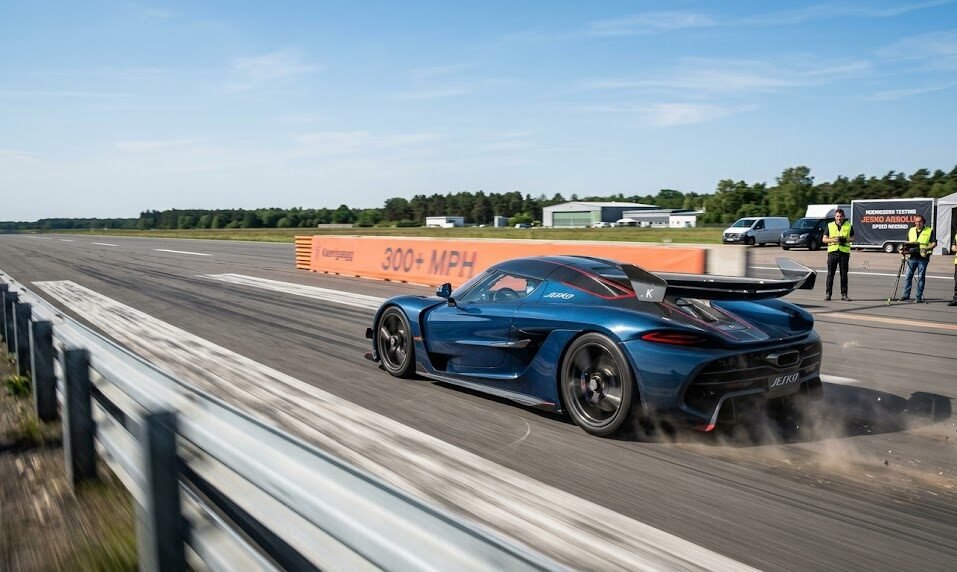
The pursuit of speed has always been part science, part obsession, and part art. Throughout automotive history, a select group of manufacturers have dedicated themselves to pushing the boundaries of what is physically possible on four wheels.
Today, few brands embody that mission better than Koenigsegg. The latest testing session involving the Jesko has once again captured global attention, fueling speculation that the Swedish hypercar may soon challenge some of the most impressive speed records ever achieved by a production vehicle.
For automotive enthusiasts, speed record attempts are about far more than numbers displayed on a digital dashboard. They represent years of engineering development, aerodynamic refinement, powertrain innovation, and relentless testing. Every kilometer per hour gained requires solving dozens of complex technical challenges.
The Jesko stands at the center of this modern quest for ultimate performance. As reports emerge from recent testing activities, excitement continues to build among collectors, industry analysts, and speed enthusiasts who believe the hypercar may be approaching a historic milestone.
The Legacy of Chasing Speed
Speed records have long served as the ultimate benchmark in automotive engineering.
Manufacturers have spent decades competing for the title of the world’s fastest production car. From the legendary supercars of the 1990s to today’s advanced hypercars, each generation has pushed the limits further than previously imagined.
Koenigsegg has become one of the most influential names in this arena. Founded by visionary entrepreneur Christian von Koenigsegg, the company transformed from a niche manufacturer into one of the world’s most respected hypercar brands.
Unlike larger automotive companies with vast corporate resources, Koenigsegg built its reputation through innovation. This independent spirit continues to define every vehicle the company produces.
Why the Jesko Matters
The Jesko is not simply another hypercar entering an already crowded market.
Named after Christian von Koenigsegg’s father, the vehicle was designed from the beginning with extreme performance as its primary objective. Every component, from its lightweight carbon-fiber construction to its advanced aerodynamics, serves a singular purpose.
At the heart of the Jesko sits a twin-turbocharged 5.0-liter V8 engine capable of producing extraordinary levels of power, particularly when running on high-octane fuels. Combined with the company’s revolutionary Light Speed Transmission (LST), the result is a powertrain engineered for maximum acceleration and sustained high-speed performance.
The Jesko Absolut variant takes this philosophy even further. Specifically optimized for top-speed capability, it sacrifices some downforce in favor of aerodynamic efficiency, making it one of the most ambitious production cars ever created.
Latest Testing Generates Excitement
Recent testing sessions have renewed speculation regarding the Jesko’s ultimate capabilities.
While official top-speed figures from the latest tests remain closely guarded, industry observers note that Koenigsegg’s engineering team continues refining vehicle stability, aerodynamic performance, and power delivery under extreme conditions.
This stage of development is crucial.
Many people assume achieving high speed simply requires adding more horsepower. In reality, once a vehicle surpasses 300 mph (483 km/h), aerodynamics become equally important. Air resistance increases dramatically, creating challenges that require innovative solutions.
The latest testing suggests Koenigsegg remains committed to unlocking the Jesko’s full potential.
The Engineering Behind the Ambition
One of the most fascinating aspects of the Jesko project is the company’s holistic engineering approach.
Rather than focusing solely on engine output, Koenigsegg has optimized every performance-related system.
The suspension system adapts to changing conditions at extreme speeds. Advanced computational fluid dynamics help minimize drag while maintaining stability. Lightweight materials reduce mass without compromising structural integrity.
As someone who has followed hypercar development for years, one trend stands out: modern speed records are increasingly won through efficiency rather than brute force alone.
The Jesko exemplifies this principle perfectly.
Its aerodynamic profile appears deceptively simple, yet every curve and surface contributes to performance. This attention to detail separates genuine record contenders from merely powerful vehicles.
Case Study: Learning from Previous Record Holders
Examining past speed record programs provides valuable insight into Koenigsegg’s strategy.
Previous record-holding hypercars often required years of development before achieving their headline numbers. Extensive testing, data collection, and engineering revisions were common elements of every successful program.
Consider how manufacturers refined tire technology, cooling systems, and aerodynamic packages over multiple testing cycles. Rarely does a speed record emerge from a single attempt.
Koenigsegg appears to be following a similar path.
Each testing session generates data that engineers can use to improve performance. Tiny gains in stability, efficiency, or power delivery can ultimately translate into meaningful increases in top speed.
This methodical approach increases the likelihood of achieving a significant milestone while maintaining safety and reliability.
Market Impact Beyond Performance
The importance of the Jesko extends beyond speed records.
Hypercars increasingly function as technological showcases that influence broader automotive development. Innovations pioneered within limited-production vehicles often find their way into future performance cars.
The Jesko demonstrates how advanced engineering can create both commercial success and technical achievement.
Collectors are particularly interested in vehicles associated with landmark accomplishments. Should the Jesko establish a new benchmark, its significance within automotive history would grow substantially.
That potential adds another layer of appeal for buyers seeking rare and historically important automobiles.
Opportunity Analysis Table
| Opportunity Area | Potential Impact | Future Outlook |
|---|---|---|
| Speed Record Achievement | Very High | Strong Potential |
| Collector Value Growth | High | Positive |
| Advanced Aerodynamic Development | Very High | Expanding |
| Hypercar Brand Recognition | High | Increasing |
| Performance Technology Transfer | High | Long-Term Benefit |
| Luxury Automotive Investment | Very High | Growing Interest |
The Unique Psychology of Speed
One unique aspect of speed record attempts is their emotional impact.
Most drivers will never experience 300 mph. Many will never even approach half that speed. Yet millions remain fascinated by these achievements.
Why?
Because speed records symbolize human ambition. They represent the desire to explore limits, challenge assumptions, and accomplish something previously thought impossible.
The Jesko embodies this mindset.
Its existence is not purely practical. It is aspirational. It demonstrates what can happen when engineers are given the freedom to pursue excellence without compromise.
This emotional dimension helps explain why speed record stories continue attracting global audiences.
Challenges Still Ahead
Despite encouraging testing progress, significant challenges remain.
Extreme-speed validation requires ideal conditions, specialized facilities, and rigorous safety protocols. Tire technology, weather conditions, and regulatory considerations can all influence outcomes.
Furthermore, competition within the hypercar segment remains intense.
Several manufacturers continue developing vehicles capable of extraordinary performance figures. Any successful record attempt must withstand intense scrutiny from enthusiasts, journalists, and industry experts.
Koenigsegg understands these expectations and appears determined to meet them through careful preparation.
Looking Toward a Potential Milestone
Whether the Jesko ultimately claims a new speed record remains to be seen.
What is already clear, however, is that the vehicle has established itself as one of the most technically impressive hypercars ever engineered.
The latest testing session reinforces Koenigsegg’s commitment to pushing boundaries and challenging conventional limitations. Every test brings the company closer to understanding the full capabilities of its remarkable machine.
If a record eventually falls, it will not simply be the result of horsepower.
It will be the culmination of thousands of engineering decisions, countless hours of testing, and an unwavering commitment to innovation.
For enthusiasts around the world, that journey may be just as exciting as the final number itself.
FAQ
What is the Koenigsegg Jesko?
The Koenigsegg Jesko is a high-performance hypercar designed for extreme acceleration, track capability, and potential top-speed records.
What is the Jesko Absolut?
The Jesko Absolut is a specialized version of the Jesko optimized for maximum top speed through reduced aerodynamic drag.
Why is Koenigsegg testing the Jesko?
The company continues refining performance, stability, and aerodynamic efficiency while exploring the vehicle’s ultimate speed potential.
Could the Jesko break a world speed record?
Many automotive analysts believe the Jesko possesses the engineering capabilities required to challenge existing production-car speed benchmarks.
What makes the Jesko unique?
Its advanced aerodynamics, powerful twin-turbo V8 engine, lightweight construction, and innovative Light Speed Transmission set it apart from competitors.
Why do speed records matter in the hypercar industry?
Speed records demonstrate engineering excellence, enhance brand prestige, and often increase collector interest in limited-production vehicles.
