


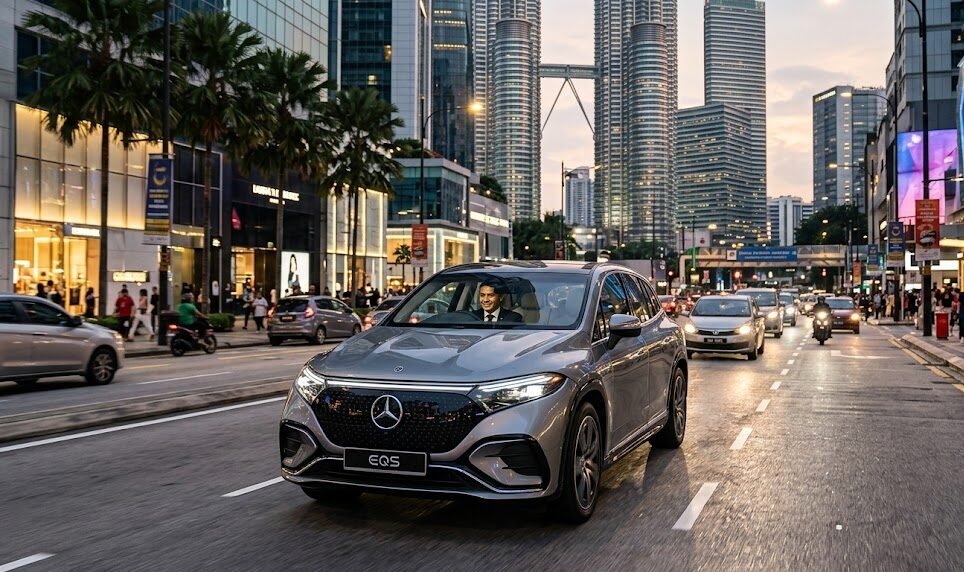
Luxury car buyers in Southeast Asia typically measured prestige through horsepower, handcrafted interiors, and the unmistakable sound of a premium combustion engine. Today, a different status symbol is emerging in the region’s busiest cities. The newest marker of success is increasingly silent, powered by batteries rather than gasoline, and packed with advanced software instead of mechanical complexity.
Premium electric vehicle (EV) brands are accelerating their expansion across Southeast Asia as a growing population of high-income urban professionals embraces sustainable mobility. From Jakarta and Singapore to Bangkok, Kuala Lumpur, and Ho Chi Minh City, affluent consumers are showing increasing interest in electric luxury vehicles that combine environmental consciousness with cutting-edge technology.
This trend represents more than an automotive shift. It reflects changing lifestyles, evolving consumer values, and the emergence of a new generation of professionals who view mobility as both a practical necessity and a personal statement.
Why Southeast Asia Has Become a Strategic EV Battleground
For global automakers, Southeast Asia is no longer considered merely an emerging market. It is becoming one of the world’s most attractive growth regions.
Several factors are driving this transformation.
The region’s expanding middle and upper-middle classes continue to generate significant purchasing power. At the same time, urbanization is creating densely populated cities where advanced transportation solutions are increasingly desirable.
Governments are also encouraging EV adoption through incentives, infrastructure development, and sustainability initiatives.
For premium EV manufacturers, the combination of rising wealth, supportive policies, and growing environmental awareness creates a unique opportunity.
Rather than competing solely in mature markets, luxury brands are increasingly viewing Southeast Asia as a future growth engine.
The Rise of the Urban Professional Consumer
The typical luxury EV buyer in Southeast Asia differs from traditional luxury car customers.
Many are professionals working in technology, finance, healthcare, consulting, entrepreneurship, and multinational corporations.
They are often:
- Digitally connected
- Sustainability-conscious
- Internationally minded
- Technology-oriented
- Experience-driven
Unlike previous generations that associated luxury with excess, younger professionals frequently prioritize efficiency, innovation, and environmental responsibility.
Owning an electric vehicle aligns with both practical needs and personal values.
For many buyers, driving a premium EV sends a message about lifestyle choices rather than simply financial success.
Beyond Sustainability: The Technology Advantage
While environmental benefits attract attention, technology often closes the sale.
Premium EVs are increasingly marketed as software-driven mobility platforms rather than traditional automobiles.
Features that appeal to urban professionals include:
- Advanced driver assistance systems
- AI-powered navigation
- Over-the-air software updates
- Smart connectivity
- Digital cockpit experiences
- Mobile app integration
- Autonomous driving capabilities
Many buyers are drawn to the idea that their vehicle continues improving after purchase through software updates.
This contrasts sharply with conventional vehicles, whose functionality remains largely unchanged over time.
The technology-first approach resonates strongly with professionals accustomed to digital ecosystems.
Case Study: The Jakarta Executive
Consider a senior technology executive living in Jakarta.
A few years ago, purchasing a luxury vehicle might have meant choosing between several premium European sedans or SUVs.
Today, the decision-making process looks very different.
The executive may prioritize:
- Reduced operating costs
- Home charging convenience
- Sustainability credentials
- Smart technology features
- Connectivity with digital devices
- Future-proof transportation
The vehicle becomes an extension of a connected lifestyle rather than simply a means of transportation.
This mindset is becoming increasingly common across major Southeast Asian cities.
Infrastructure Growth Supports Market Expansion
One challenge facing EV adoption has always been charging infrastructure.
Fortunately, Southeast Asia has made substantial progress in recent years.
Governments and private companies continue investing in:
- Public charging stations
- Fast-charging networks
- Commercial charging hubs
- Residential charging solutions
- Smart grid integration
As charging availability improves, consumer confidence increases.
Luxury buyers, in particular, often have access to private parking and residential charging installations, reducing many of the barriers faced by mass-market consumers.
This makes affluent urban professionals among the earliest adopters of premium electric mobility.
Opportunity Table: Premium EV Market Drivers in Southeast Asia
| Market Factor | Current Impact | Future Potential |
|---|---|---|
| Rising Urban Wealth | High | Very High |
| EV Charging Infrastructure | Medium-High | Very High |
| Sustainability Awareness | High | Very High |
| Government Incentives | Medium | High |
| Smart Vehicle Technology | High | Extremely High |
| Corporate ESG Goals | Medium-High | High |
| Luxury Lifestyle Trends | High | High |
| Digital Connectivity Demand | Very High | Extremely High |
The table illustrates how multiple economic and social trends are converging to support premium EV growth throughout the region.
Luxury Brands Are Redefining Their Identity
Interestingly, many luxury automakers are undergoing a broader transformation.
Historically, premium automotive brands emphasized performance, craftsmanship, and engineering heritage.
Today, they increasingly highlight:
- Sustainability
- Digital innovation
- Wellness features
- Connected experiences
- Environmental responsibility
This evolution reflects changing consumer expectations.
Affluent buyers still value prestige, but they increasingly seek products that align with modern lifestyles and future-oriented thinking.
Luxury is becoming smarter rather than simply more expensive.
Corporate Professionals Drive Fleet Opportunities
Beyond individual consumers, premium EV brands are finding opportunities in corporate fleets.
Large organizations increasingly pursue environmental, social, and governance (ESG) objectives.
As part of these initiatives, companies are exploring electric mobility solutions for:
- Executive transportation
- Employee vehicle programs
- Corporate leasing fleets
- Business travel services
Premium EVs can help organizations reduce emissions while reinforcing innovation-focused corporate identities.
This business segment may become an important growth channel over the coming years.
A Unique Perspective: EVs as Professional Branding Tools
One overlooked aspect of luxury EV adoption involves personal branding.
Professionals today often think carefully about how they present themselves to clients, colleagues, and business partners.
Vehicles have long served as symbols of professional success.
However, the meaning of automotive status is evolving.
A premium electric vehicle may communicate:
- Technological sophistication
- Environmental awareness
- Forward-thinking leadership
- Innovation mindset
- Global outlook
For many urban professionals, these attributes are increasingly valuable.
The vehicle becomes part of a broader personal brand narrative.
The Economic Ripple Effect
The growth of premium EVs benefits more than automakers.
An expanding ecosystem is emerging around electric mobility.
Opportunities include:
- Charging infrastructure providers
- Battery technology firms
- Renewable energy companies
- Smart mobility platforms
- Automotive software developers
- Fleet management services
As adoption increases, these supporting industries may experience significant growth.
The result is a broader economic impact extending beyond vehicle sales.
Challenges Remain
Despite strong momentum, several obstacles persist.
Premium EV pricing remains relatively high compared to conventional vehicles.
Charging infrastructure, while improving, still varies significantly between cities and countries.
Consumer education also remains important.
Potential buyers often have questions regarding battery longevity, charging times, resale value, and maintenance costs.
However, as technology advances and market maturity increases, many of these concerns are gradually diminishing.
The Road Ahead
Industry analysts expect Southeast Asia’s premium EV market to continue expanding throughout the remainder of the decade.
Several trends support this outlook:
- Growing urban affluence
- Improved charging networks
- Falling battery costs
- Increasing environmental awareness
- Strong government support
- Advancing vehicle technology
Luxury EV brands are likely to intensify competition as they seek to establish leadership positions in one of the world’s most promising automotive regions.
Consumers, meanwhile, will benefit from greater choice, innovation, and accessibility.
Conclusion
Premium EV brands are targeting Southeast Asia’s growing population of high-income urban professionals because the region represents a unique convergence of wealth, technology adoption, sustainability awareness, and modern lifestyle aspirations.
What began as a niche market is rapidly becoming a significant opportunity for luxury automakers. Today’s affluent buyers are not simply purchasing transportation—they are investing in connected, sustainable, and future-ready mobility experiences.
As cities modernize and infrastructure expands, premium electric vehicles may become one of the defining symbols of professional success across Southeast Asia.
In this new automotive era, luxury is no longer measured solely by what is under the hood. Increasingly, it is defined by intelligence, sustainability, and innovation.
