


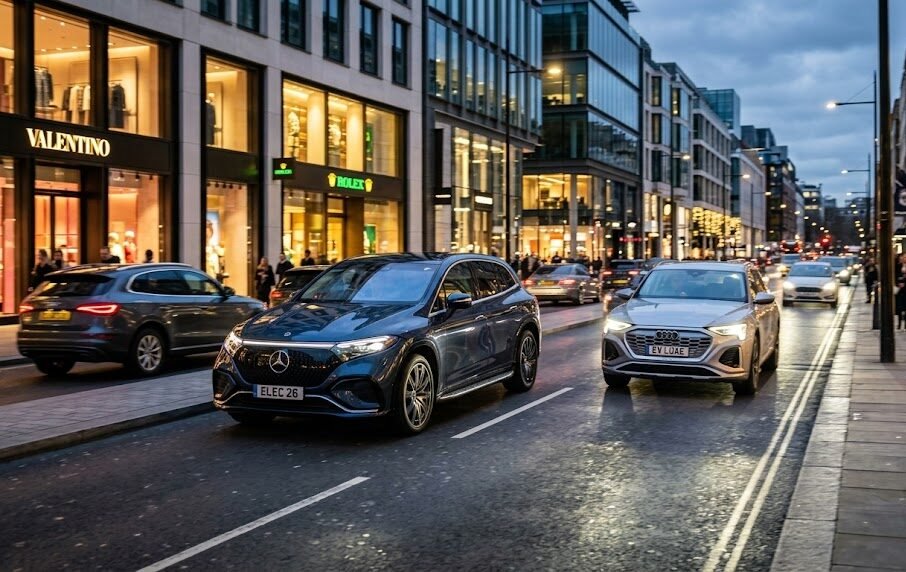
The first time I drove a luxury electric SUV, I expected a quiet ride and impressive acceleration. What I didn’t expect was how quickly it changed my perception of premium vehicles altogether. Instead of focusing on horsepower alone, I found myself appreciating intelligent software, effortless driving assistance, refined cabin technology, and surprisingly low operating costs.
That single experience made me realize that luxury in 2026 is no longer defined by a powerful engine—it is defined by intelligence, sustainability, and user experience.
That shift is happening worldwide. Luxury electric SUVs have evolved from niche products into the centerpiece of the premium automotive industry. Consumers who once compared leather quality and engine displacement are now discussing battery range, software updates, autonomous features, charging speed, and digital ecosystems. Premium automakers are competing less on combustion performance and more on technological innovation.
A New Definition of Luxury
Luxury has always reflected changing consumer expectations.
Years ago, luxury meant handcrafted interiors, V8 engines, premium materials, and exclusive badges. Today, buyers still appreciate exceptional craftsmanship, but they increasingly expect seamless connectivity, over-the-air software updates, AI-powered driver assistance, and sustainable manufacturing practices.
Modern premium customers want vehicles that simplify daily life while delivering an emotional driving experience. Electric SUVs have become the ideal platform because they combine practicality with cutting-edge innovation.
This transformation explains why luxury electric SUVs continue gaining market share across North America, Europe, China, and rapidly growing Asian markets.
Why Premium Buyers Prefer Electric SUVs
Several factors explain the explosive growth of luxury EV SUVs.
1. Exceptional Performance
Electric motors deliver instant torque, allowing even large SUVs to accelerate with remarkable smoothness.
Unlike traditional gasoline engines, electric powertrains provide immediate responsiveness without waiting for gear changes.
The result is effortless acceleration that feels refined rather than aggressive.
2. Advanced Technology
Luxury buyers increasingly evaluate vehicles based on technology rather than mechanical specifications.
Modern premium EV SUVs include:
- AI-powered navigation
- Intelligent voice assistants
- Massive digital displays
- Augmented reality head-up displays
- Semi-autonomous driving
- Automatic parking systems
- Predictive battery management
Software has become one of the strongest selling points.
3. Lower Ownership Costs
Although initial purchase prices remain high, many owners discover lower long-term expenses.
Electric vehicles generally require:
- Less routine maintenance
- No engine oil changes
- Fewer moving components
- Reduced brake wear through regenerative braking
- Lower fueling costs in many regions
For premium customers keeping vehicles for several years, ownership economics continue improving.
The Technology Race Is Accelerating
Luxury manufacturers are no longer competing only against traditional rivals.
Technology companies are influencing customer expectations faster than ever.
Consumers now expect vehicles to receive regular feature updates, improved safety systems, and even performance enhancements through software.
Artificial intelligence is also becoming central to the driving experience.
Many premium electric SUVs now learn driver preferences, optimize charging schedules, recommend efficient routes, and personalize cabin settings automatically.
The vehicle increasingly behaves like a smart device on wheels.
Consumer Behavior Has Changed Dramatically
Market research throughout 2025 and early 2026 indicates a growing preference among affluent buyers for sustainable mobility without sacrificing comfort.
Several purchasing motivations repeatedly appear:
| Buying Motivation | Why It Matters |
|---|---|
| Environmental awareness | Reduces emissions while maintaining luxury standards |
| Advanced technology | Buyers value innovation more than engine size |
| Premium driving experience | Quiet cabins improve comfort |
| Lower maintenance | Fewer mechanical repairs over time |
| Future resale value | Growing EV demand supports long-term investment |
Luxury buyers no longer view sustainability as a compromise.
Instead, they increasingly see electric mobility as the premium option.
Case Study: A Family Transitioning to Electric Luxury
Consider a family upgrading from a traditional luxury SUV purchased six years ago.
Initially, they worried about charging infrastructure and long-distance travel.
After switching to a premium electric SUV, several unexpected benefits emerged:
- Weekly fuel expenses dropped significantly.
- Home charging became more convenient than gas stations.
- Cabin noise decreased dramatically.
- Software updates continuously improved vehicle features.
- Long road trips became easier with integrated charging route planning.
Within a year, the family reported that they would not consider returning to a gasoline-powered luxury SUV.
Their experience mirrors what many premium consumers now report globally.
Experience Matters More Than Specifications
One interesting trend in 2026 is that buyers increasingly prioritize daily experience instead of technical numbers.
Battery capacity remains important.
Range still matters.
Charging speed influences purchasing decisions.
However, buyers ultimately remember how the vehicle makes them feel every day.
Smooth acceleration.
Comfortable seating.
Quiet cabins.
Responsive infotainment.
Reliable navigation.
Minimal maintenance.
Luxury has become experiential rather than mechanical.
Opportunities for Manufacturers
The premium EV segment continues creating enormous business opportunities.
| Opportunity | Market Potential |
| AI-powered personalization | Very High |
| Ultra-fast charging ecosystems | High |
| Subscription software features | High |
| Premium digital services | High |
| Autonomous driving technology | Very High |
| Sustainable luxury materials | Growing rapidly |
Manufacturers investing in software ecosystems are positioning themselves for long-term competitiveness.
Future profits may increasingly come from digital services rather than vehicle sales alone.
Challenges Still Exist
Despite rapid adoption, luxury electric SUVs still face obstacles.
Charging infrastructure varies significantly between countries.
Battery raw material supply remains under pressure.
Vehicle prices remain higher than comparable gasoline SUVs.
Cold weather can reduce driving range.
Consumers also continue learning about battery longevity and charging habits.
Fortunately, battery technology continues improving every year, while charging networks expand rapidly in major markets.
These challenges are becoming smaller rather than larger.
My Perspective as an Automotive Observer
Watching the automotive industry evolve over the past decade has been fascinating.
Manufacturers once competed almost entirely through horsepower and engine refinement.
Today, software engineers have become just as important as mechanical engineers.
Luxury vehicles now receive updates like smartphones.
Artificial intelligence assists with driving.
Connectivity defines convenience.
This transformation feels similar to the smartphone revolution that reshaped consumer electronics years ago.
Companies embracing digital innovation appear best positioned for future success.
What Buyers Should Consider Before Purchasing
Anyone considering a luxury electric SUV should evaluate more than advertised range.
Important considerations include:
- Availability of home charging
- Public charging infrastructure
- Software update policy
- Warranty coverage
- Battery degradation guarantees
- Interior quality
- Safety technologies
- Digital ecosystem compatibility
- Total ownership cost
Making decisions based on the complete ownership experience often leads to greater long-term satisfaction.
The Road Ahead
Luxury electric SUVs are no longer simply an alternative to premium gasoline vehicles—they have become the benchmark for modern automotive excellence.
As battery technology advances, charging networks expand, and artificial intelligence becomes increasingly sophisticated, the gap between electric and traditional luxury vehicles will continue widening.
Manufacturers that prioritize innovation, customer experience, software development, and sustainability are likely to lead the premium automotive market for years to come.
For consumers, this means more choices, smarter vehicles, lower operating costs, and an entirely new definition of luxury.
The premium SUV of the future isn’t just electric. It’s connected, intelligent, constantly improving, and designed around the driver’s lifestyle rather than the engine beneath the hood.
Frequently Asked Questions (FAQ)
Are luxury electric SUVs worth the higher purchase price?
For many buyers, yes. Lower maintenance costs, reduced fuel expenses, advanced technology, and improved driving comfort often help justify the premium price over time.
What is the biggest advantage of a luxury electric SUV?
The combination of instant performance, quiet operation, cutting-edge technology, and lower long-term ownership costs makes luxury electric SUVs highly attractive.
Is charging infrastructure improving in 2026?
Yes. Many countries continue expanding fast-charging networks, making long-distance travel more practical than ever before.
Will battery technology continue improving?
Industry trends suggest batteries will become more efficient, charge faster, and offer longer driving ranges while reducing production costs.
Are software updates really important?
Absolutely. Over-the-air updates can improve vehicle performance, security, navigation, and even introduce entirely new features without requiring dealership visits.
Should buyers focus only on driving range?
No. Charging speed, software quality, warranty coverage, safety features, cabin comfort, and overall ownership experience are equally important when selecting a premium electric SUV.
