


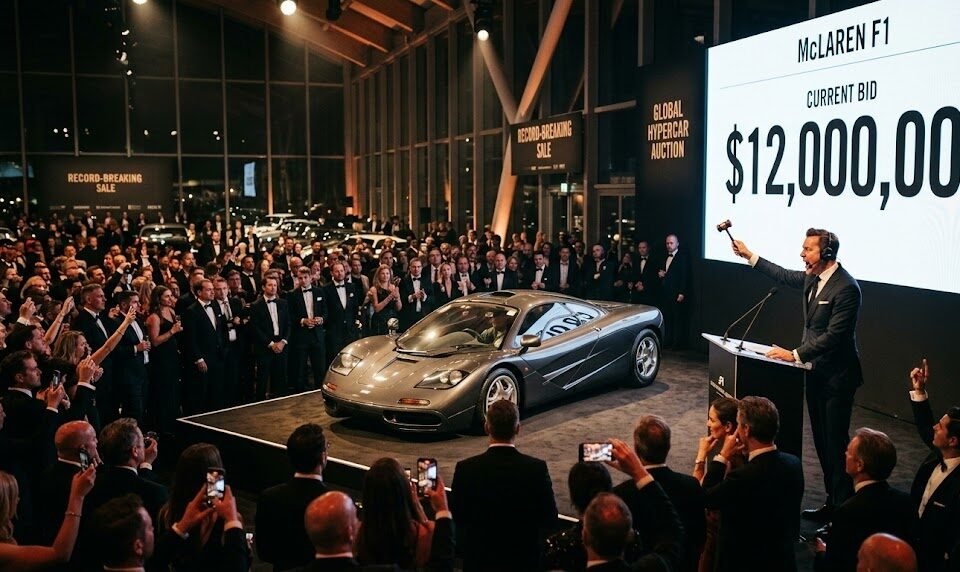
HALOSUMUT AUTONET – I still remember attending my first collector car auction years ago. The atmosphere felt electric, with bidders quietly calculating their next move while automotive enthusiasts admired machines that represented decades of engineering excellence. Back then, a million-dollar sale seemed extraordinary. Today, the hypercar market has entered an entirely different universe, and a recent $12 million sale proves just how dramatically the landscape has evolved.
A rare hypercar recently captured global attention after selling for an astonishing $12 million at auction, setting a new benchmark for collectors and investors alike. The record-breaking transaction highlights the growing appetite for ultra-exclusive vehicles that combine cutting-edge performance, historical significance, and extreme rarity.
SEE ALSO >>> Top 10 Hypercars Billionaires Are Fighting to Buy in 2026
The sale was not simply about horsepower or top speed. Instead, it represented a perfect storm of factors that continue to drive values higher in the luxury automotive sector. Limited production numbers, pristine condition, documented ownership history, and increasing demand from wealthy collectors all contributed to the remarkable result.
Why Hypercars Are Becoming Alternative Investment Assets
Traditionally, collectors purchased exotic vehicles because of their passion for automotive engineering. While enthusiasm remains a major motivation, today’s buyers increasingly view rare hypercars as alternative investment assets.
Recent years have seen significant growth in collectible asset classes. Fine art, luxury watches, rare wines, and hypercars have attracted investors seeking diversification beyond traditional financial markets.
Unlike mass-produced vehicles that depreciate over time, highly limited hypercars can appreciate significantly. Some models have doubled or even tripled in value within a decade, especially when production numbers remain extremely low.
Market analysts note that younger wealthy buyers are entering the collector car space with different priorities. Many grew up idolizing modern hypercars rather than classic vehicles from the 1950s or 1960s. As a result, demand for iconic machines from the 2000s and 2010s continues to rise.
The Anatomy of a $12 Million Sale
What exactly transforms a hypercar into an eight-figure collectible?
Experts generally point to several critical elements.
1. Rarity
Scarcity remains the most powerful value driver. Vehicles produced in fewer than 100 units often generate intense competition among collectors.
When only a handful of examples exist worldwide, wealthy enthusiasts are often willing to pay extraordinary premiums to secure ownership.
2. Historical Significance
Cars associated with major technological breakthroughs typically command higher prices.
Whether introducing revolutionary aerodynamics, hybrid performance systems, or record-breaking speed achievements, historically important models often become investment-grade collectibles.
3. Provenance
Ownership history matters.
Vehicles previously owned by celebrities, racing legends, or influential collectors frequently attract stronger bidding activity. Documentation that verifies authenticity can significantly enhance market value.
4. Condition
Collectors increasingly seek low-mileage examples maintained in factory-original condition.
Even minor modifications can negatively affect auction results when dealing with highly sought-after hypercars.
Hypercar Market Growth by Segment
The table below illustrates how various segments of the collector car market have evolved in recent years.
| Segment | Average Demand Growth | Investment Potential |
|---|---|---|
| Classic Sports Cars | Moderate | Stable |
| Vintage Race Cars | High | Strong |
| Luxury Grand Tourers | Moderate | Medium |
| Modern Supercars | High | Strong |
| Rare Hypercars | Very High | Exceptional |
| Limited Special Editions | Very High | Exceptional |
Industry observers believe rare hypercars currently occupy the strongest position among luxury automotive assets due to their scarcity and global appeal.
A Case Study in Modern Collecting
One particularly interesting trend involves collectors treating hypercars similarly to fine art.
Instead of driving these vehicles regularly, owners often store them in climate-controlled facilities. Detailed maintenance records are preserved, and mileage is kept extremely low.
A collector who acquired a limited-production hypercar for approximately $3 million several years ago recently saw comparable examples sell for more than $8 million. Such appreciation has encouraged investors to examine the automotive sector more closely.
However, successful collecting requires substantial expertise. Not every expensive car becomes a future auction star. Buyers must understand production numbers, brand heritage, engineering significance, and market demand.
The Globalization of Hypercar Demand
Another factor driving auction records is the increasingly international nature of the collector market.
In the past, auctions primarily attracted regional buyers. Today, digital bidding platforms allow collectors from North America, Europe, the Middle East, and Asia to compete simultaneously.
This globalization creates intense competition for rare vehicles.
A hypercar offered at auction may attract bidders from multiple continents, each willing to pay a premium to secure an asset that may not become available again for years.
The result is a market where exceptional examples regularly exceed pre-sale estimates.
What Makes Modern Hypercars So Special?
Modern hypercars differ significantly from traditional supercars.
Manufacturers have invested billions in research and development to create vehicles capable of delivering extraordinary performance while incorporating advanced technologies.
Carbon-fiber construction, hybrid powertrains, active aerodynamics, and sophisticated electronic systems have transformed the category.
Many collectors believe today’s hypercars represent a golden age of automotive innovation. Future generations may view these machines the same way enthusiasts currently admire legendary racing cars from previous decades.
This perception contributes directly to rising auction values.
Opportunities for Collectors and Investors
Although a $12 million purchase remains inaccessible for most buyers, opportunities still exist throughout the collector car market.
Emerging Opportunities
| Opportunity | Entry Level | Growth Potential |
| Limited Production Supercars | Medium | High |
| Special Anniversary Editions | Medium | High |
| Track-Focused Variants | Medium | High |
| Early Hybrid Hypercars | High | Exceptional |
| Final Internal Combustion Models | High | Exceptional |
Experts suggest that vehicles representing major technological milestones may experience significant appreciation over the coming decades.
As the automotive industry shifts toward electrification, collectors are increasingly interested in preserving landmark models from the internal combustion era.
A Unique Turning Point for the Industry
The recent $12 million auction result represents more than a headline-grabbing transaction.
It reflects changing attitudes toward automotive collectibles, the globalization of luxury asset markets, and the growing recognition of hypercars as cultural artifacts.
For manufacturers, these record-breaking sales reinforce the prestige associated with limited-production models. For collectors, they validate the importance of rarity, provenance, and historical significance.
Most importantly, the sale demonstrates that exceptional automobiles continue to inspire passion across generations. Whether viewed as engineering masterpieces, investment assets, or symbols of human innovation, hypercars remain among the most captivating creations in the automotive world.
As auction records continue to fall, one thing appears certain: the race for ownership of the world’s rarest hypercars is far from over.
FAQ
Why did the hypercar sell for $12 million?
The vehicle likely combined extreme rarity, historical significance, excellent condition, and strong global demand among collectors.
Are hypercars good investments?
Some rare hypercars have appreciated significantly over time, but success depends on factors such as production numbers, brand reputation, and market demand.
What factors increase a hypercar’s value?
Rarity, provenance, low mileage, originality, condition, and technological significance are among the most important factors.
Why are collectors paying more for modern hypercars?
Many younger collectors grew up admiring modern hypercars, creating strong demand for iconic models from the 2000s and 2010s.
Can electric hypercars become future collectibles?
Yes. Vehicles that introduce groundbreaking technology or represent major milestones in automotive history may become highly desirable collectibles.
Will hypercar auction records continue to rise?
Many analysts believe values could continue increasing for exceptionally rare models, although market conditions and collector preferences will always influence prices.
