


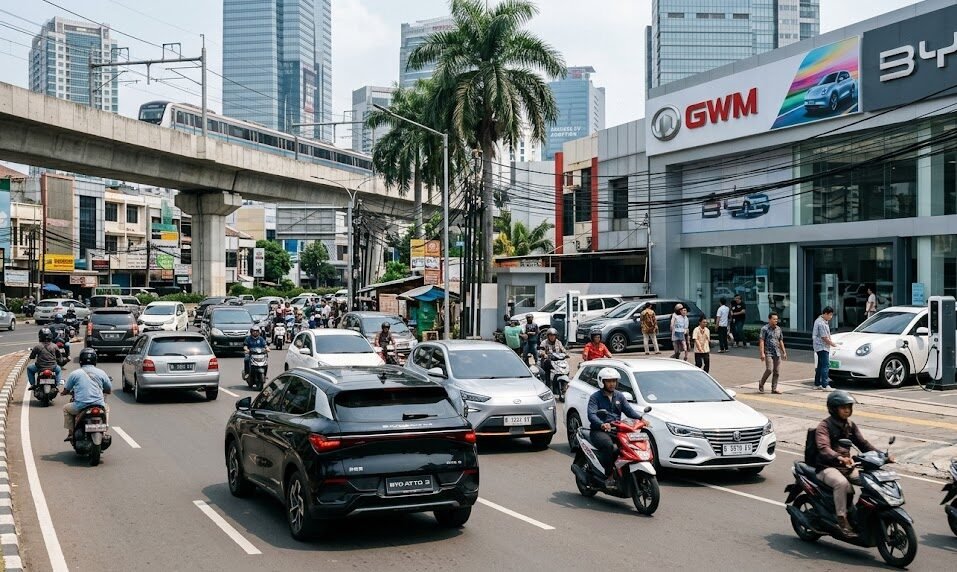
The automotive landscape of Southeast Asia is experiencing one of the most dramatic transformations in its history. For decades, Japanese automakers dominated roads from Indonesia to Thailand, while European and American brands occupied niche segments.
Today, however, a new wave of competition is changing the game. Chinese electric vehicle (EV) brands are rapidly expanding across the region, bringing affordable technology, aggressive pricing, and innovative business strategies that are challenging long-established industry leaders.
What was once considered a market heavily dependent on internal combustion engine vehicles is now becoming a battleground for electric mobility.
Chinese manufacturers have recognized Southeast Asia’s enormous potential and are investing heavily in factories, dealerships, charging infrastructure, and marketing campaigns. As a result, consumers are witnessing a shift that could permanently alter the future of transportation in the region.
Why Southeast Asia Became a Prime EV Battlefield
Southeast Asia is home to more than 680 million people and represents one of the fastest-growing consumer markets in the world. Rising middle-class incomes, increasing urbanization, and growing environmental concerns have created ideal conditions for EV adoption.
Governments across the region are also encouraging the transition to cleaner transportation. Countries such as Thailand, Indonesia, Malaysia, and Vietnam have introduced incentives, tax reductions, and investment policies aimed at attracting EV manufacturers.
Chinese brands entered the market at precisely the right moment. While many traditional automakers were still evaluating their EV strategies, Chinese companies arrived with mature electric vehicle platforms, competitive pricing, and a willingness to localize production.
The result is a perfect storm that is accelerating the growth of EVs across Southeast Asia.
The Key Chinese EV Brands Leading the Charge
Several Chinese manufacturers have emerged as dominant players in the region.
BYD
BYD has become one of the most recognizable EV brands in Southeast Asia. The company’s diverse lineup, ranging from compact city cars to premium electric SUVs, appeals to a broad range of consumers.
Its vehicles often offer advanced features that rival more expensive competitors. Large infotainment screens, modern driver-assistance systems, and long battery ranges have made BYD a favorite among first-time EV buyers.
MG
Although MG has British roots, the brand is now owned by Chinese automotive giant SAIC Motor. MG has successfully positioned itself as an affordable yet technologically advanced option.
Models like the MG4 have gained popularity thanks to their balance between performance, practicality, and value. In several Southeast Asian countries, MG has become one of the best-selling EV brands.
GWM (Great Wall Motor)
Great Wall Motor has expanded aggressively through its Ora and Haval sub-brands. The company focuses on stylish design and competitive pricing while emphasizing advanced technology features.
Its vehicles are particularly attractive to younger buyers who want something modern without paying luxury-brand prices.
Chery
Chery has returned to many Southeast Asian markets with a renewed focus on electrification. The company combines attractive styling with practical features and aims to target consumers seeking affordable family transportation.
NIO, XPeng, and Zeekr
Although currently operating in smaller volumes compared to BYD or MG, premium Chinese EV brands such as NIO, XPeng, and Zeekr are gradually building awareness among affluent consumers.
These companies are introducing cutting-edge technologies that challenge established premium brands from Europe and Japan.
Competitive Pricing Is Changing Consumer Behavior
One of the most significant reasons for the success of Chinese EV brands is pricing.
Traditional automakers often struggle to offer affordable electric vehicles due to development costs and legacy manufacturing structures. Chinese manufacturers, on the other hand, benefit from extensive domestic supply chains and large-scale battery production.
This allows them to offer vehicles with impressive specifications at prices that are often significantly lower than competing models.
For many Southeast Asian consumers, purchasing an EV is no longer a luxury decision. Chinese brands have transformed electric mobility into a realistic option for middle-income households.
As a result, consumer perceptions toward EV ownership are rapidly evolving.
Battery Technology Gives Chinese Brands an Advantage
Battery technology is the heart of every electric vehicle, and Chinese manufacturers hold a strong advantage in this area.
China dominates global battery production and controls a significant portion of the EV battery supply chain. Companies have invested heavily in research, manufacturing capacity, and material sourcing.
Many Chinese EV brands utilize advanced battery technologies that provide:
- Longer driving ranges
- Faster charging times
- Enhanced safety performance
- Lower production costs
- Improved durability
This technological leadership enables manufacturers to deliver vehicles that meet the practical needs of Southeast Asian drivers while remaining competitively priced.
Local Manufacturing Is Accelerating Growth
Chinese automakers understand that long-term success requires more than importing vehicles.
Many companies are establishing local manufacturing operations across Southeast Asia. Thailand has become a major hub for EV production, attracting billions of dollars in investment from Chinese manufacturers.
Indonesia has also emerged as a strategic location due to its vast nickel reserves, which are critical for battery production. The country’s ambition to become a regional EV manufacturing center aligns closely with the expansion plans of Chinese brands.
Local production provides several benefits:
- Reduced import tariffs
- Lower logistics costs
- Faster delivery times
- Job creation
- Stronger government support
These advantages help Chinese automakers strengthen their position while contributing to local economic development.
The Impact on Traditional Automotive Leaders
The rapid rise of Chinese EV brands has forced traditional automakers to rethink their strategies.
Japanese manufacturers have historically dominated Southeast Asia, particularly through brands such as Toyota, Honda, Mitsubishi, and Nissan. However, their transition to fully electric vehicles has been slower than some Chinese competitors.
As Chinese EV sales continue to grow, established manufacturers face increasing pressure to accelerate their electrification efforts.
Consumers are now comparing vehicles based on software features, charging capabilities, battery range, and connectivity rather than solely focusing on brand reputation.
This shift is changing competitive dynamics throughout the automotive industry.
Digital-First Sales Strategies Are Winning Customers
Chinese EV brands are also transforming how vehicles are marketed and sold.
Many companies adopt digital-first strategies that combine online purchasing platforms with modern showroom experiences. Instead of relying solely on traditional dealerships, they create technology-focused retail environments that emphasize customer engagement.
Buyers can often:
- Configure vehicles online
- Schedule test drives digitally
- Track delivery status through apps
- Access remote software updates
- Manage vehicle functions via smartphones
These features resonate strongly with younger consumers who expect a seamless digital experience.
Challenges Still Remain
Despite impressive growth, Chinese EV brands face several obstacles.
Charging infrastructure remains uneven across Southeast Asia. While major cities are expanding charging networks rapidly, rural areas often lack adequate facilities.
Consumer education is another challenge. Many potential buyers still have concerns regarding battery lifespan, resale value, and long-term maintenance costs.
In addition, intense competition among EV manufacturers could lead to pricing pressures that impact profitability.
Regulatory differences between countries also require manufacturers to adapt their strategies for each market.
Nevertheless, these challenges are unlikely to slow the overall momentum of EV adoption.
What the Future Looks Like
The future of Southeast Asia’s automotive market appears increasingly electric, and Chinese brands are positioned to play a central role in that transformation.
Industry analysts expect EV adoption rates to continue rising throughout the decade as battery costs decline and charging infrastructure improves. Government incentives and environmental policies will likely further accelerate this transition.
Chinese manufacturers are expected to expand their product portfolios, introduce new technologies, and deepen local partnerships across the region.
As competition intensifies, consumers will benefit from greater choice, improved technology, and more affordable electric vehicles.
The automotive industry of Southeast Asia is entering a new era, and Chinese EV brands are helping define what that future looks like.
Conclusion
Chinese EV brands are no longer outsiders attempting to enter Southeast Asia’s automotive market. They have become major players that are actively reshaping the industry through innovation, affordability, and strategic investment.
By leveraging advanced battery technology, competitive pricing, local manufacturing, and digital-first business models, these companies are accelerating the transition toward electric mobility.
While challenges remain, the influence of Chinese EV manufacturers will continue to grow as Southeast Asia embraces a cleaner and more technologically advanced transportation future. For consumers, governments, and industry leaders alike, the rise of Chinese EV brands represents one of the most important automotive stories of the decade.
FAQ
Why are Chinese EV brands growing so quickly in Southeast Asia?
Chinese EV brands offer affordable pricing, advanced technology, and attractive vehicle designs. Their aggressive investment strategies and local manufacturing efforts have also accelerated market growth.
Which Chinese EV brand is most popular in Southeast Asia?
BYD is currently among the most successful Chinese EV brands in the region, although MG, GWM, Chery, and other manufacturers are also gaining significant market share.
How do Chinese EVs compare with Japanese vehicles?
Chinese EVs often provide more technology features and competitive pricing, while Japanese brands traditionally benefit from strong reputations for reliability and extensive service networks.
Is Southeast Asia ready for widespread EV adoption?
The region is progressing rapidly, with governments investing in incentives and charging infrastructure. However, infrastructure development remains uneven across different countries.
Why is Indonesia important for EV manufacturing?
Indonesia possesses large nickel reserves, a key component in EV batteries. This makes the country an attractive destination for EV and battery manufacturing investments.
Will Chinese EV brands dominate Southeast Asia?
While dominance is not guaranteed, Chinese brands are expected to remain major competitors due to their technological capabilities, pricing advantages, and expanding local presence.

1 Comment
Pingback: The New Battery Technology That Could Add 1,000 KM of Driving Range - Halosumut AutoNet